![Inactive Wear
Windproof Outer Layer
Keeps you toasty thru hours of inactivity
Cotton Layer
Wicks food and beverage spills away from your skin
Zipper Pockets
Great snack storage
Elastic
Expands as you do!
Vertical Stripes
Slimming!
Velcro Closures
Minimizes strenuous bending time
Extra-Cushy Soles
Supports your ever-increasing weight
Reprinted from Funny Times / PO Box 18530 / Cleveland Hts. OH 44118
phone: 216.371.8600 / email: ft@funnytimes.com
[Descrição visual: charge em preto e branco no formato de um anúncio/diagrama de produto. Ao centro, um homem de meia-idade, corpulento, de pé, visto de frente, usando um agasalho esportivo completo (jaqueta aberta sobre camiseta, calça de moletom com listras verticais nas laterais e tênis brancos com solado grosso). Do título manuscrito "Inactive Wear", dentro de uma moldura no topo, saem sete etiquetas ligadas por linhas às diferentes partes da roupa, cada uma apontando um "benefício" irônico da roupa para quem é sedentário. Assinatura do cartunista "MARP" abaixo da figura e, na base, a linha de crédito da Funny Times.]](/uploads/ita-2010-ingles-q19-20.png)
B2
Interpretação de texto
Cartum
ITA 2010 - Inglês - Questão 20: listras verticais e solados no cartum Inactive Wear
Considere as seguintes afirmações:
I. As listas verticais indicadas afinam a silhueta.
II. A figura mostra sapatos que não se desgastam com o tempo.
III. Inactive Wear é apropriada para praticantes de exercícios físicos.
Está(ão) correta(s):
Resolver questão →
B2
Interpretação de texto
Cartum
ITA 2010 - Inglês - Questão 19: o benefício que o cartum Inactive Wear não traz
Assinale a opção que NÃO descreve benefícios apontados na figura.
Resolver questão →
C1
Gramática
Texto de divulgacao
Reescrita de despite em texto sobre slime mold
In August of 2000, a Japanese scientist named Toshiyuki Nakagaki announced that he had trained an amoebalike organism called slime mold to find the shortest route through a maze. Nakagaki had placed the mold in a small maze comprising four possible routes and …
Indique a opção em que a reescrita do trecho “Despite its being an incredibly primitive
organism (a close relative of ordinary fungi) with no centralized brain whatsoever, the slime mold managed
to plot the most efficient route to the food, …” (parágrafo 1) está correta e mantém o mesmo significado do
texto.
Resolver questão →
C1
Interpretação de texto
Texto de divulgacao
As áreas transformadas pelas pesquisas de Keller e Segel (ITA 2010)
In August of 2000, a Japanese scientist named Toshiyuki Nakagaki announced that he had trained an amoebalike organism called slime mold to find the shortest route through a maze. Nakagaki had placed the mold in a small maze comprising four possible routes and …
Assinale a opção que, de acordo com o texto, contempla somente as áreas para as quais as
pesquisas de Keller e Segel contribuíram.
Resolver questão →
C1
Interpretação de texto
Texto de divulgacao
Evelyn Fox Keller e a matemática aplicada à biologia (ITA 2010)
In August of 2000, a Japanese scientist named Toshiyuki Nakagaki announced that he had trained an amoebalike organism called slime mold to find the shortest route through a maze. Nakagaki had placed the mold in a small maze comprising four possible routes and …
De acordo com o texto, Evelyn Fox Keller
I. tornou-se PhD em Física pela Universidade de Harvard e foi a pioneira nos estudos sobre teoria de
sistemas complexos.
II. acreditava na importância da Matemática não apenas para o estudo da Física, mas também da Biologia.
III. Influenciou as pesquisas do matemático Lee Segel, levando-o a se interessar pelo comportamento dos
slime molds.
Está(ão) correta(s)
Resolver questão →
C1
Interpretação de texto
Texto de divulgacao
O experimento do labirinto de Toshiyuki Nakagaki (ITA 2010)
In August of 2000, a Japanese scientist named Toshiyuki Nakagaki announced that he had trained an amoebalike organism called slime mold to find the shortest route through a maze. Nakagaki had placed the mold in a small maze comprising four possible routes and …
Em sua pesquisa, Toshiyuki Nakagaki
I. colocou um slime mold num labirinto com quatro saídas.
II. treinou um slime mold a sair de um labirinto pelo caminho mais curto.
III. colocou alimentos em todas as saídas do labirinto para atrair o slime mold.
Está(ão) correta(s)
Resolver questão →
C1
Interpretação de texto
Texto de divulgacao
Slime mold: inteligência sem cérebro (ITA 2010)
In August of 2000, a Japanese scientist named Toshiyuki Nakagaki announced that he had trained an amoebalike organism called slime mold to find the shortest route through a maze. Nakagaki had placed the mold in a small maze comprising four possible routes and …
Assinale a opção CORRETA.
Resolver questão →
![As perguntas de 9 a 13 correspondem ao texto a seguir:
Hanging in the balance
TOKYO
For the first time since the second world war, Japan conducts jury-like trials
WHEN 72-year-old Katsuyoshi Fujii shuffled into a Tokyo court on August 3rd with a rope tied around his waist, having confessed to stabbing a neighbour, his fate was all but sealed. Crime may be exceedingly low in Japan but anyone who is prosecuted almost inevitably ends up behind bars. The conviction rate for all prosecutions is 99% and confessions—made in police custody without a lawyer present—are almost as common. But on this occasion, for the first time since 1943, citizens from outside the legal profession stood in judgment of Mr Fujii, alongside professional judges. These "lay judges" not only help determine innocence or guilt but punishment too. They can even order the death penalty, though Mr Fujii got 15 years.
This is a big change for Japan, where, according to Takashi Maruta of Kansei Gakuin University, trials have long been "ceremonial", with lots of legal jargon and little questioning by judges of police evidence. Citizen juries were suspended during the second world war because eligible jurors, men over 30, were away fighting. After a spate of executions of innocent people in the late 1980s, pressure mounted to bring civilians back into the courtroom. Some legal scholars such as Mr Maruta wanted American-style juries; what they got was a fudge in which lay judges sit alongside the professionals. The experiment will, however, be studied by other Asian countries such as South Korea and Taiwan that share aspects of Japan's system.
In a society of hierarchy and deference towards authority, laymen will rarely dare to argue with professional judges. Opinion polls suggest a large majority of Japanese people are loth even to take part in a trial.
That said, in Mr Fujii's case, the judges took the unusual step of cross-questioning the accused and the victim's son. More than 2,000 people showed up to get tickets for the trial. It may be an imperfect way to democratise the judicial process, but it looks like a step in the right direction. With Japan about to hold an election that could end 55 years of almost uninterrupted one-party rule, the ____I____ ordinary citizens can fill the power vacuum by taking part in public life, the ____II____
The Economist, de 8/8/2009.
[Descrição visual: recorte em preto e branco de página de revista, emoldurado por um retângulo, com fundo levemente acinzentado. No alto, o título em corpo grande "Hanging in the balance"; abaixo, sobre tarja cinza-clara, a linha de local "TOKYO" em versalete pequeno e o subtítulo em negrito. O texto corre em duas colunas e começa com capitular "W" de duas linhas. No fim da coluna da direita, duas tarjas cinza retangulares cobrem palavras do texto, marcadas com os algarismos romanos "I" e "II" — são as lacunas da Questão 9. O recorte termina logo após a lacuna II, sem o fecho da frase.]](/uploads/ita-2010-ingles-q9-13.png)
C1
Interpretação de texto
Reportagem
O julgamento de Katsuyoshi Fujii no Japão
Com relação ao caso de Katsuyoshi Fujii, pode-se afirmar que
I. o júri condenou-o a 15 anos de prisão.
II. houve acareação entre o acusado, Sr. Fujii, e o filho da vítima.
III. por ser um caso comum de julgamento, mais de duas mil pessoas se candidataram a participar do corpo
de jurados.
Está(ão) correta(s)
Resolver questão →
C1
Interpretação de texto
Reportagem
Jurados leigos e pena de morte: o que o texto autoriza afirmar
De acordo com o texto:
I. Países como a Coréia do Sul e Taiwan têm os mesmos índices de criminalidade que o Japão.
II. É crescente o número de japoneses interessados em atuar como jurados no Japão.
III. Cidadãos comuns que participam de julgamentos como jurados podem sentenciar a pena capital.
Está(ão) correta(s)
Resolver questão →
C1
Interpretação de texto
Reportagem
Juízes leigos ao lado dos profissionais: o modelo japonês
Considere as seguintes afirmações:
I. O texto apresenta o caso ocorrido com um cidadão japonês acusado de atacar seu vizinho.
II. De acordo com as regras vigentes, o corpo de jurados japonês é formado por profissionais da área
jurídica e por cidadãos comuns.
III. Mr. Maruta é o grande responsável pela reformulação do sistema penal no Japão e em outros países
asiáticos.
Está(ão) correta(s)
Resolver questão →
C1
Vocabulário
Reportagem
Traduções de though, were away fighting e about to
Considere a tradução dos seguintes trechos extraídos do texto:
I. ...though Mr Fujii got 15 years. (parágrafo 1)
...embora Mr Fujii tenha recebido (uma pena de) 15 anos.
II. ...because eligible jurors (…) were away fighting. (parágrafo 2)
…porque os jurados elegíveis (…) estavam na guerra.
III. ...With Japan about to hold an election ... (parágrafo 4)
Com o Japão prestes a realizar uma eleição ...
Está(ão) correta(s)
Resolver questão →
C1
Gramática
Reportagem
Comparativo duplo: the more..., the better
Assinale a opção que preenche corretamente as lacunas I e II, no último parágrafo do texto.
Resolver questão →
![As perguntas de 4 a 8 correspondem ao texto a seguir:
Bife de lomo, or bean sprouts?
BUENOS AIRES
The discreet rise of vegetarianism in the carnivorous capital of the world
VISITORS to Palermo, a well-heeled neighbourhood of Buenos Aires, are used to having their hair primped to perfection and their body fat measured. That goes both for the humans who frequent the trendy boutiques and spas and for the prize Aberdeen Angus cows that arrive at the agricultural show held there every July. This year, the visiting ranchers are preoccupied by the beef industry's informal pessimism index—the share of young cows that farmers slaughter for meat rather than keep for breeding. It has recently hit a three-decade high, owing to recession, drought and government price-controls. To add culinary insult to economic injury, vegetarianism is spreading in Argentina.
In the world's most carnivorous country, vegetarians used to be a tiny band of masochists. But when the economy collapsed in 2002, a recently formed Argentine Vegetarian Union gained members, and veggie restaurants sprouted. The main reason is cost. Vegetarian restaurants have lower overheads since they don't need freezers, says Marisa Ledesma, one of the owners of Bio Restaurante, a smart eatery.
Now the economy is in recession once again. That seems to have led more omnivores to abandon meat, says Roberto Moyano, the manager of La Esquina de las Flores, the capital's oldest vegetarian restaurant. And as they munch soya steaks, diners relish new evidence of the health benefits of eating less red meat.
This year, the industry reckons, the average Argentine will get through 57 kilos of beef. That is down from 68 kilos last year, but it still means many more asados than the 41 kilos scoffed by Uruguayans, the world's second-biggest beef-eaters. Barrel-bellied carnivores are still the norm, and vegetarianism remains an isolated gesture of gastronomic defiance. Your correspondent recently came across a note scribbled on a paper napkin in a Palermo café which read: "In Argentina vegetarians are for eating."
The Economist, de 8/8/2009.
[Descrição visual: recorte em preto e branco de uma página de revista, emoldurado por um retângulo. No topo, o título em corpo grande "Bife de lomo, or bean sprouts?"; abaixo dele, sobre tarja cinza-clara, a linha de local "BUENOS AIRES" em versalete pequeno e o subtítulo em negrito. O texto corre em duas colunas e começa com capitular "V" de duas linhas. No pé da coluna da direita há uma charge: um homem corpulento de bigode e camiseta branca, sentado a uma mesa coberta por toalha xadrez, apoia os braços sobre a mesa e olha para um prato grande com um assado; na travessa, um animal/peixe estilizado de expressão assustada aparece deitado entre legumes, e uma ave pequena está empoleirada no ombro/cabeça do homem.]](/uploads/ita-2010-ingles-q4-8.png)
C1
Gramática
Reportagem
O conector since e o sentido de causa
Leia o seguinte período extraído do texto:
Vegetarian restaurants have lower overheads since they don’t need freezers, says Marisa Ledesma,
one of the owners of Bio Restaurante, a smart eatery. (parágrafo 2).
Assinale a opção que pode substituir o termo since sem que o sentido da oração seja comprometido.
Resolver questão →
C1
Vocabulário
Reportagem
Sinônimos em texto sobre vegetarianismo na Argentina
Assinale a opção em que o termo da coluna II NÃO pode substituir o termo da coluna I no texto.
Resolver questão →
C1
Interpretação de texto
Reportagem
Índice de pessimismo do setor de carne: a afirmação incorreta
Assinale a opção INCORRETA.
Resolver questão →
C1
Interpretação de texto
Reportagem
Vegetarianismo em Buenos Aires: o custo como motor da mudança
De acordo com o texto:
I. O crescimento do índice de vegetarianos tornou os moradores de Palermo mais saudáveis.
II. O modo de vida dos vegetarianos é bem visto pelos argentinos.
III. A adesão a hábitos vegetarianos é consequência do custo da carne vermelha.
IV. Bio Restaurante e La Esquina de las Flores são os principais restaurantes vegetarianos da Argentina.
Está(ão) correta(s)
Resolver questão →
![As questões 1 a 3 referem-se ao índice da Revista TIME.
TIME — VOL. 173, NO. 22 | 2009
Index
6 | POSTCARD: RAMALLAH
8 | INBOX
BRIEFING
11 | THE MOMENT Britain's Parliament is racked by scandal
12 | THE WORLD Militants threaten Somalia's fragile government; Pfizer announces U.S. drug giveaway; women join the Kuwaiti legislature; where are Pakistan's nukes?
14 | VERBATIM Teaching America's Boy Scouts all about illegal immigration; Vogue's Anna Wintour disses Minnesota
15 | MILESTONES Farewell to a Fiat heiress who became Italy's only female Foreign Minister
COMMENTARY
16 | IN THE ARENA A simple plan for dealing with America's enemy prisoners
THE WELL
17 | COMMENTARY India's election provided a great spectacle but few answers to the issues that matter
26 | WORLD: DRONE WARS Why pilotless aircraft are causing problems in Pakistan
30 | ASIA: CHINA An epic public-works program heralds the country's bid for greatness
36 | EUROPE What European medicine can teach Washington about health care
40 | CURIOUS CAPITALIST Why are people ignoring the man who called the recession?
COVER STORY
18 | UNITED STATES A revealing look at the life and work of a very different kind of First Lady
23 | Q&A Michelle Obama speaks out on getting to the White House—and being a mom there
LIFE
41 | RELIGION Is it O.K. to use Twitter in church? A few pastors are actually encouraging the faithful to tweet
43 | SPORT How a tennis string changed professional tennis
44 | SOCIAL NORMS Believing stereotypes may be holding back your brain's performance
ARTS
49 | MUSIC Eminem's first album since 2004: he hasn't changed, but the world around him has
51 | MOVIES Terminator is bigger and louder than ever. But it's got all the emotions of a cyborg
52 | BOOKS Charles Dickens is making a comeback—as a fictional character
TIME, June 1, 2009 (adapted).
[Descrição visual: reprodução em preto e branco da página de sumário ("Index") da revista TIME, com o logotipo "TIME" no alto à esquerda e, à direita, a linha "VOL. 173, NO. 22 | 2009". O conteúdo está distribuído em quatro colunas separadas por filetes verticais. As seções (BRIEFING, COMMENTARY, THE WELL, COVER STORY, LIFE, ARTS) aparecem como etiquetas em caixa alta sobre tarja escura; cada chamada traz o número da página em negrito, seguido de barra vertical, o rótulo da editoria em versalete e a chamada em si. A coluna "COVER STORY" está destacada por um filete horizontal grosso acima da etiqueta. Todo o índice está emoldurado por um retângulo de borda fina na página da prova.]](/uploads/ita-2010-ingles-q1-3.png)
B2
Vocabulário
Texto de divulgacao
Tradução de termos no índice da revista TIME
Assinale a opção em que a tradução do termo da coluna II corresponde ao termo da coluna I.
Resolver questão →
B2
Interpretação de texto
Texto de divulgacao
Índice da TIME: a única afirmação correta sobre as chamadas
Assinale a opção CORRETA.
Resolver questão →
B2
Interpretação de texto
Texto de divulgacao
Índice da TIME: qual assunto a edição NÃO aborda
Assinale a opção que indica um assunto que NÃO é abordado pela revista TIME de 1/6/2009.
Resolver questão →

B1
Interpretação de texto
Cartao-postal
Trade postcards with us! — cartão-postal do projeto ANDRILL (ENEM 2010)
Os cartões-postais costumam ser utilizados por viajantes que desejam enviar notícias dos lugares que visitam a parentes e amigos. Publicado no site do projeto ANDRILL, o texto em formato de cartão-postal tem o propósito de
Resolver questão →
B1
Interpretação de texto
Infográfico
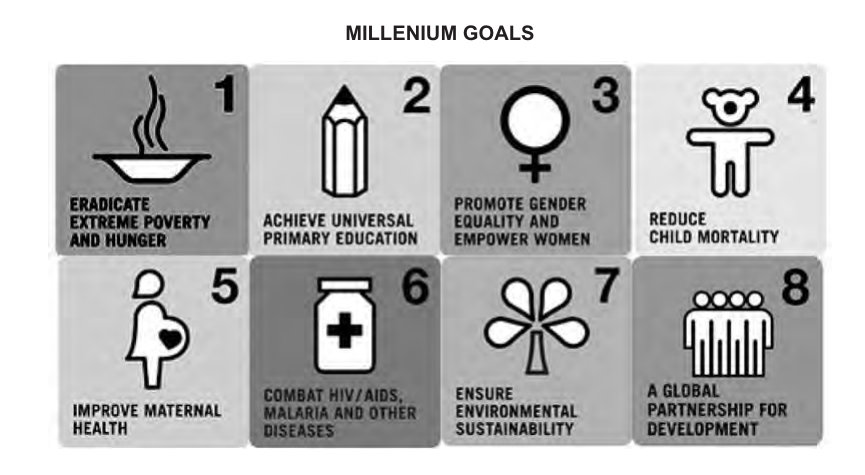
Millenium Goals — as metas do milênio da ONU (ENEM 2010)
Definidas pelos países membros da Organização das Nações Unidas e por organizações internacionais, as metas de desenvolvimento do milênio envolvem oito objetivos a serem alcançados até 2015. Apesar da diversidade cultural, esses objetivos, mostrados na imagem, são comuns ao mundo todo, sendo dois deles:
Resolver questão →
B2
Interpretação de texto
Artigo
The Weather Man — revista Speak Up (ENEM 2010)
THE WEATHER MAN They say that the British love talking about the weather. For other nationalities this can be a banal and boring subject of conversation, something that people talk about when they have nothing else to say to each other. And yet the weather is …
Ao conversar sobre a previsão do tempo, o texto mostra
Resolver questão →
B2
Interpretação de texto
Anuncio publicitario
The Death of the PC — anúncio do The Motley Fool (ENEM 2010)
THE DEATH OF THE PC The days of paying for costly software upgrades are numbered. The PC will soon be obsolete. And BusinessWeek reports 70% of Americans are already using the technology that will replace it. Merrill Lynch calls it "a $160 billion tsunami." Co…
Ao optar por ler a reportagem completa sobre o assunto anunciado, tem-se acesso a duas palavras que Bill Gates não quer que o leitor conheça e que se referem
Resolver questão →